Breeding for resistance
What hygienic behaviour is, how it is tested, how to select and record breeder colonies, and where Australia's Plan Bee programme fits.
Breeding for resistance means choosing queens from colonies that cope better with pests and disease, and raising the next generation from them. It is slow work and it does not replace monitoring or treatment. This page covers the one trait Australian research has tested most, hygienic behaviour, and the national programme that supports breeders.
Why it matters now
Varroa mite is established in parts of New South Wales, Victoria, Queensland, South Australia and the ACT. It has not been found in Western Australia or Tasmania. See varroa mite for testing and registered treatments. Selection is a long-term project for breeders. No line of Australian bees is sold here as varroa resistant on the evidence in this page, so keep monitoring and treating as your state requires.
What hygienic behaviour is
Extension Australia describes three steps. Worker bees must:
- detect dead or diseased capped brood,
- uncap the cell, and
- remove the brood from the cell and the hive.
What it can and cannot do, according to Extension Australia:
- American foulbrood: removal helps only if infected brood is taken out before the bacteria form spores. It is not a substitute for reporting (see foulbrood).
- Chalkbrood: it is described as the primary resistance mechanism. However, a survey of 649 colonies in eastern Australia found that hygienic scores did not predict whether a colony had chalkbrood. The authors recommend caution before selecting for chalkbrood resistance this way.
- Varroa: the evidence is mixed, so do not rely on hygienic behaviour alone.
How hygienic behaviour is tested
Extension Australia names the freeze-killed brood test, using liquid nitrogen, as the method recommended for Australia. The PLOS ONE survey used the same test. The steps:
- Choose a frame with a good patch of sealed (capped) brood. Extension Australia advises against testing during a heavy nectar flow or in extreme temperatures.
- Place a pipe on the brood and pour in liquid nitrogen. The survey froze an area of 110 sealed cells.
- Let the nitrogen evaporate, then return the frame to the hive.
- Count the cells after 24 hours. The survey counted removal as the cells emptied compared with the cells that were frozen.
- A colony must remove at least 95% of the dead brood to count as hygienic.

Liquid nitrogen can cause cold burns and asphyxiation. Extension Australia says to wear suitable protective gear and to test outdoors or in a well-ventilated area. Most hobby beekeepers will not have the gear, so the practical route is to buy queens from a breeder who tests, or to ask your club or a breeder about shared testing.
The survey’s authors recommend repeating tests across different nectar conditions. They found the stricter scoring (only fully emptied cells count) more reliable for selection.
Selecting breeders
Extension Australia says hygienic traits can be bred into bees: assess colonies, then choose the most hygienic ones to produce the next generation of queens. The survey found that colonies headed by queens from hygienic mothers, and colonies in breeding programmes, were more likely to be hygienic.
A practical approach:
- Test every colony you might breed from, in the same way and under similar conditions.
- Look at more than one trait. Plan Bee covers traits such as honey production, disease resistance, colony strength and temperament, so do not select on one test score alone.
- Raise queens only from the best colonies (see queen rearing).
- Re-test the daughter colonies and keep the ones that hold up.
Keep records
Selection only works if you can compare colonies. Record, for each hive:
| Record | Why |
|---|---|
| Hive number and queen’s mother | Shows which breeder line each colony came from |
| Date and weather or nectar flow at testing | Test results can change with conditions |
| Test result as a percentage | Lets you rank colonies |
| Temperament, brood pattern, honey yield | Other traits you want to keep |
| Any disease found | Pests and disease affect scores and decisions (see inspections and records) |
Australia’s Plan Bee programme
Plan Bee is the national honey bee genetic improvement programme, administered by AgriFutures Australia, with partners that include NSW DPI, the University of Sydney, Better Bee WA and the Animal Genetics and Breeding Unit. According to AgriFutures it offers or is developing:
- a national database to help choose breeding stock by trait,
- the Plan Bee Breeding Manual, which covers setting objectives, recording data and evaluating colonies, and
- free genetic testing for bee breeders, to check how closely related hives are and whether stock shows signs of inbreeding.
Extension Australia says breeders keep selling queens as normal, and that breeders make the final decision on which colonies to use. Participation needs pedigrees or genetic samples.
If you are thinking of breeding, start with the Plan Bee manual and talk to a queen breeder or your club before you buy equipment.
Checklist
- Keep monitoring for varroa and treat as your state requires.
- Test colonies the same way, repeat the tests and write the results down.
- Select on several traits, not one score.
- Breed from the best, then re-test the daughters.
- Read the Plan Bee manual, and ask a breeder about testing.
Photo credits
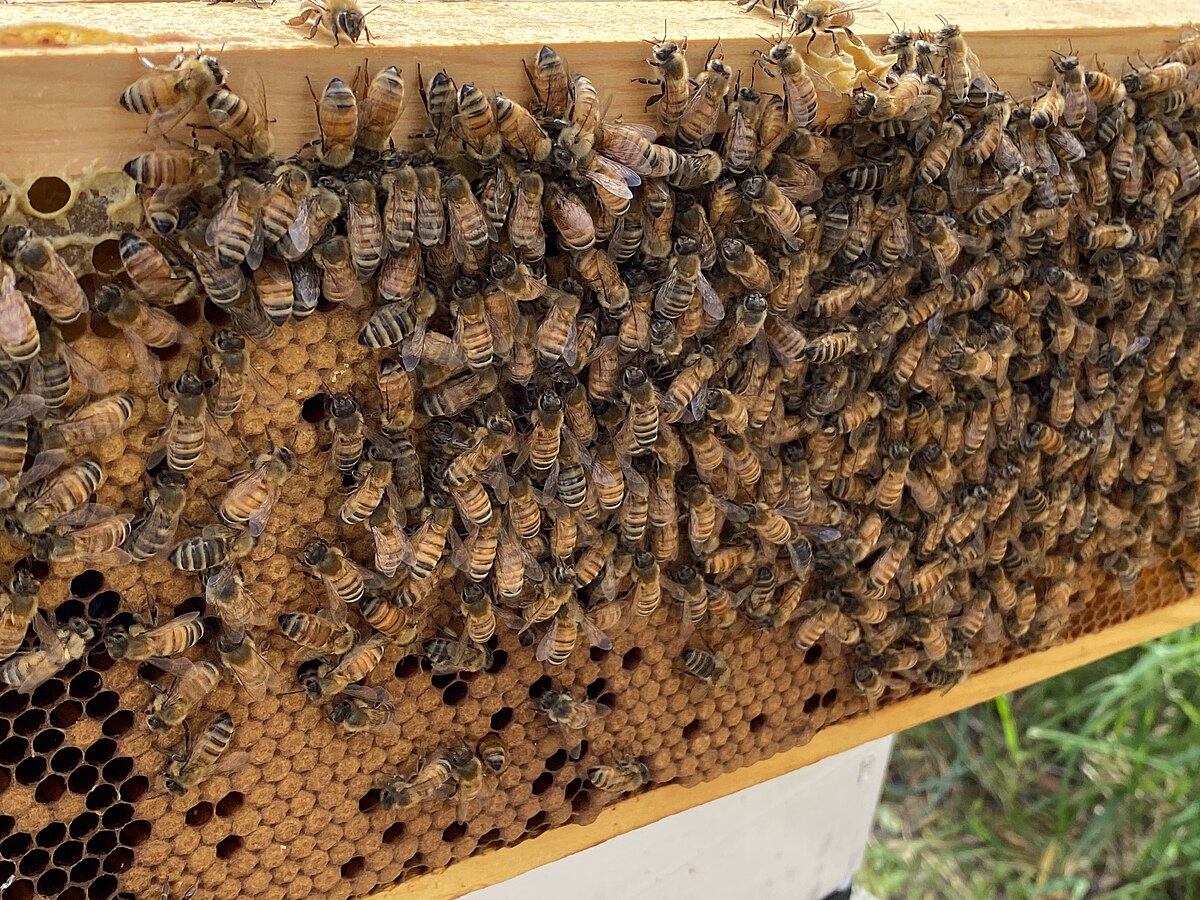
- Capped worker brood: Einebillion, Wikimedia Commons, CC BY 4.0.
Sources
Every fact on this page was checked against at least two independent sources.
- Hygienic behaviourExtension Australia (Professional Beekeepers)Research and industry
- Hygienic behaviour selection via freeze-killed honey bee brood not associated with chalkbrood resistance in eastern AustraliaPLOS ONE (via PubMed Central)Research and industry
- Honey Bee Genetic Improvement Program (Plan Bee)AgriFutures AustraliaResearch and industry
- Plan Bee: national honey bee genetic improvement programExtension Australia (Professional Beekeepers)Research and industry