Wax moth
How to spot wax moth damage, how to protect stored comb without chemicals, and why strong colonies are the best defence.
Wax moths are a common pest of beehives and, especially, of stored comb. Two species occur in Australia, the greater wax moth (Galleria mellonella) and the lesser wax moth (Achroia grisella). The moths don’t feed. The damage is done by their larvae (caterpillars), which tunnel through comb and eat wax, pollen and the leftovers in brood cells. This guide covers how to spot damage, what to do about it, and how to keep stored comb safe.
Part 1: Check your hives and stored comb
What to look for
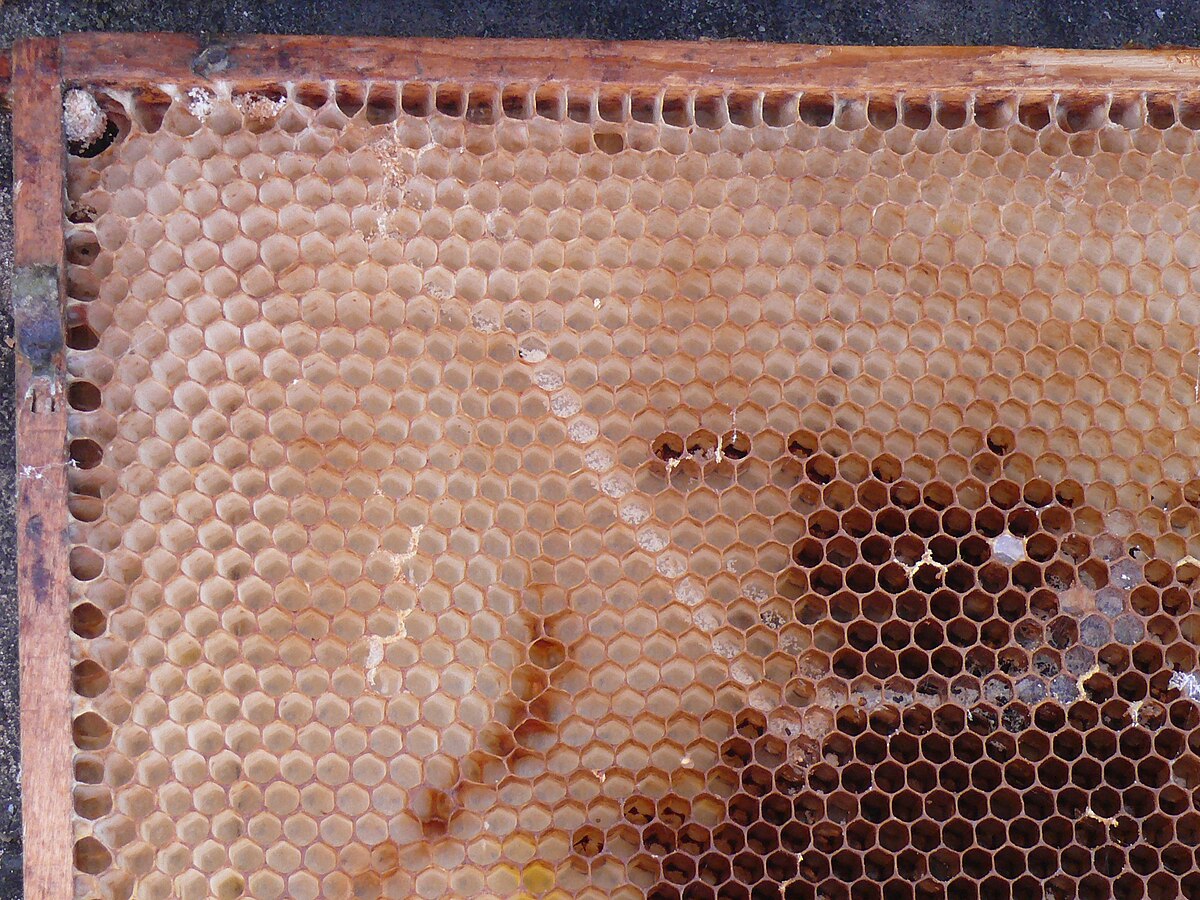
- Silky webbing and tunnels through the comb, sometimes a mass of web over comb that has been destroyed.
- Cocoons stuck to frames, top bars and other hive parts.
- Bald brood: larvae partly remove the wax cappings of sealed brood, exposing the pupae underneath, often in lines that follow the path of the larva.
- In stored comb, clean-looking combs can still hold eggs that hatch later.
One or two larvae in a strong colony are normal, because the bees remove them. If you find wax moth in a hive that was in use, look for the underlying problem: starvation or poor nutrition, a failing or missing queen, or disease. The diagnosis guide can help. Greater wax moth larvae grow to about 25 mm and spin webbing, which separates them from small hive beetle larvae.

Gear you need
- Your usual protective gear and hive tool. See Your first inspection.
- A freezer big enough for frames, or a cool room.
- Strong sealed plastic bags or boxes for storing comb.
How to check
- At each inspection, look for webbing, tunnels and cocoons on the frames, top bars and the bottom board.
- Look at the brood for bald patches.
- Check how many frames the bees cover. Comb they can’t cover is attacked first.
- Check stored comb regularly, because an infestation can develop quickly.
Part 2: Treat and report
Approved products
Wax moth has no routine chemical treatment for beekeepers. BeeAware says chemical treatments should be avoided because of the risk of contaminating honey products. The official sources used for this page don’t name any registered product for use on comb, so none is listed. Before using any product, check the APVMA register and follow the label exactly. Don’t use fumigants or other chemicals yourself.
How to treat
- Clean out light damage. Scrape cocoons off hive parts with a hive tool, and clear debris from the bottom board and cracks. BeeAware says a flame torch can be used on non-plastic equipment.
- Freeze infested or suspect comb. BeeAware and eXtensionAUS both say temperatures below -7 °C kill all stages within 4 to 5 hours. Start timing only once the comb itself has reached that temperature.
- Seal comb after freezing. Comb can be reinfested once it comes out of the freezer. Keep it dry and sealed in strong plastic bags or boxes where moths can’t get in.
- Store comb cool and ventilated. BeeAware says to control temperature, ventilation and light in storage. Keep checking, because cool storage slows the moths rather than killing them.
- Remove what can’t be saved. Heavily webbed comb is best taken out of the apiary so it doesn’t breed more moths.
- Fix the cause. If a colony was weak, look at nutrition, the queen and disease before you restore it.
What to report
| State | Can you treat? | What you must report | Who to contact |
|---|---|---|---|
| Check your state | Yes, using the methods above | Nothing is listed. The official pages used for this guide don’t mention a reporting requirement for wax moth | Your state department, if you want advice |
Rules can change. Check your state’s page if you are unsure.
Prevention
- Keep colonies strong and populous, with a young, healthy queen. BeeAware also says to replace brood comb every 3 to 4 years.
- Don’t leave more comb in a hive than the bees can cover, and prevent brood in honey supers.
- Don’t leave dead-out hives or old, unattended comb lying around. They are an ideal breeding place.
- Remove burr comb, repair split frames and keep bottom boards clear.
Related pages
Photo credits
- Wax moth tunnel in comb: Goldmull, Wikimedia Commons, CC BY 3.0.
Sources
Every fact on this page was checked against at least two independent sources.
- Wax mothBeeAware (Plant Health Australia)Official
- Wax moth a beekeeping pestAgriculture VictoriaOfficial
- Wax motheXtensionAUS Professional Beekeepers (Nadine Chapman)Research and industry
- Public Chemical Registration Information System (PubCRIS)Australian Pesticides and Veterinary Medicines Authority (APVMA)Official