Requeening and queen problems
How to recognise a failing or missing queen, when to replace her, and how to introduce a caged queen and check she has been accepted.
The queen is the only bee that lays fertilised eggs, so a colony is only as good as its queen. A failing queen shows up in the brood, so most queen problems are found during a normal inspection (see inspections and records).
Signs of queen problems
| What you see | What it may mean |
|---|---|
| No eggs or very young larvae | The queen has died, stopped laying or is not there. Check again in a few days before acting. |
| A patchy brood pattern, with many empty cells among capped and open brood | A failing or older queen. A scattered pattern is worth investigating, but it can also point to disease (see diagnosis guide). |
| Mostly raised, domed drone cappings | A drone-laying queen or laying workers (see below). |
| Falling bee numbers and slow build-up | A poor queen, or a colony that has gone queenless. |
| Queen cells built on the face of the comb | The colony may be replacing her (supersedure) or preparing to swarm. See swarm control and splits. |
| A colony much more aggressive than before | A change of queen. Some strains are also naturally more defensive. |
You do not have to find the queen. Eggs and young larvae show she was there within the last few days.
When to requeen
Extension Australia says older queens lay fewer eggs, and their pheromones (scent signals) are less effective at holding back swarming and worker egg-laying. It suggests replacing queens every one to two years, and sooner if the colony is aggressive or performing poorly. Extension Australia’s spring checklist also lists replacing older queens as part of swarm management, and recommends queens selected for traits such as honey production and low disease incidence.
Common reasons:
- The queen is missing, dead or failing.
- The brood pattern is poor.
- The colony is hard to handle or keeps swarming.
- The queen is older (see the one-to-two-year guide above).
Buying a queen
- Buy a mated, laying queen in a cage from a reputable queen breeder. Ask about the strain, her age and when she will be posted or collected.
- Plan the date before you order. Have the hive ready on the day the queen arrives.
- Rules on bringing bees and queens in from other states differ, so check your state department’s page before you order from interstate.
- Keep the queen cool and away from insecticides, direct sun, cold draughts and ants until she goes in. In hot weather, Extension Australia suggests one drop of water on the wire gauze.
- Make sure the cage is plugged with candy. Workers eat through it over several days and release the queen.
Introduce a caged queen, step by step
These steps follow Extension Australia’s advice.
- Remove or kill the old queen at least several hours before the new one goes in. If you cannot find her, do not introduce a new queen yet.
- Remove every emergency queen cell (check all frames, including the lower edges).
- Prepare the cage. Take off any covering over the candy plug, but do not let the queen out. Never introduce a caged queen without a candy plug, as the workers will reject her.
- Place the cage between frames in the middle of the brood nest, wire mesh facing the bees and where it cannot fall.
- Close the hive and leave it undisturbed for up to a week while she starts laying.
- Record the date in your notes.
Check she has been accepted
Extension Australia says a new queen may take up to a week to start laying, so leave the colony alone until then. Then open the hive gently:
- Look for eggs and very young larvae. This shows she is laying.
- Check the cage is empty and remove it.
- Look for new queen cells. If you find them, the bees may not have accepted her. Contact the supplier or a local club.
- If there are no eggs, wait a few more days and look again.
If the new queen has not worked, you will need a different queen or to combine the colony with another one.
Laying workers
A colony that has been queenless for a while can end up with laying workers: workers that lay unfertilised eggs, which can only produce drones. A colony with a scattered pattern, several eggs in a cell, or drone brood in worker-size cells needs a closer look. Fixing a laying-worker colony is tricky, so ask your local club or state apiary officer (see clubs and associations) before acting. If you cannot explain what you see, compare it with the diagnosis guide.
Marking queens
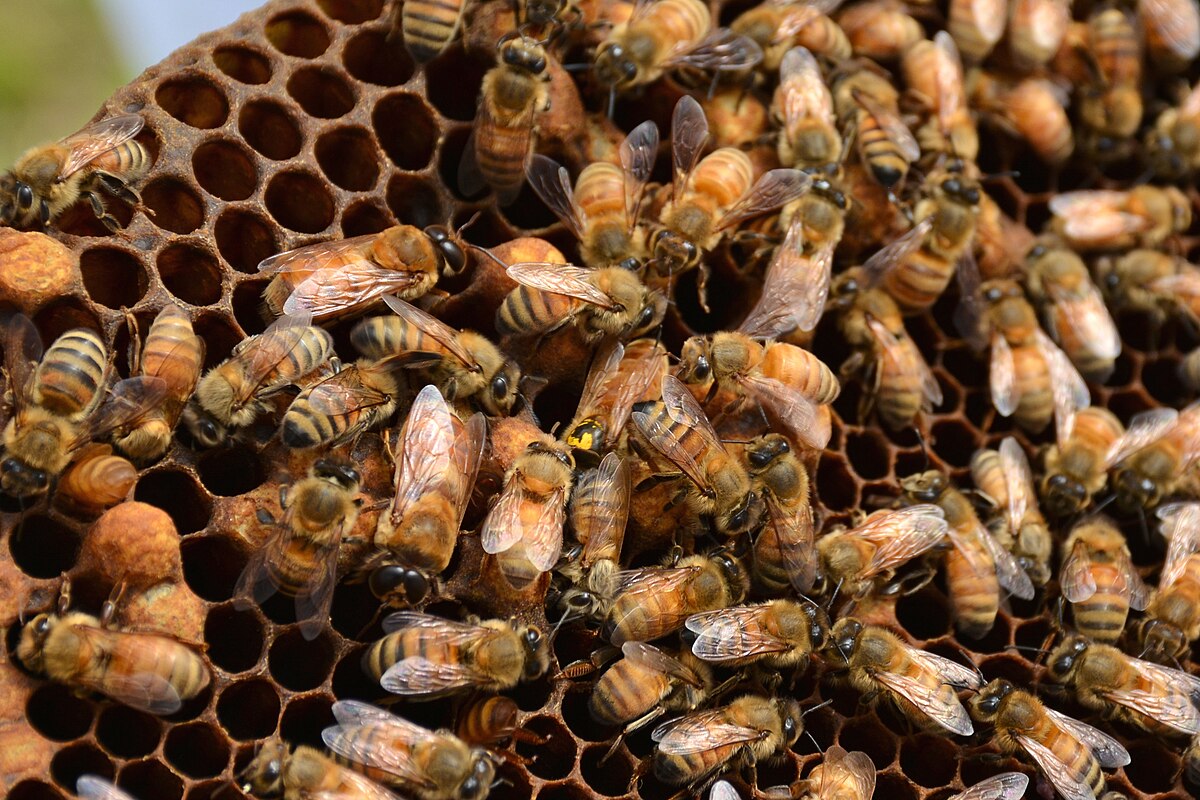
Marking helps you find the queen and shows her age. Many queens come already marked, and marking yourself takes practice, so it is easier to learn from an experienced beekeeper. See clubs and associations.

Queen checklist
- Look for eggs and young larvae at every inspection.
- Replace older or failing queens.
- Buy from a reputable breeder, and check interstate rules.
- Remove the old queen and all emergency cells before introducing the new one.
- Leave the colony alone for up to a week.
- Check for eggs, then record the result.
Photo credits
- Marked queen: U.S. Geological Survey, Wikimedia Commons, Public domain.
Sources
Every fact on this page was checked against at least two independent sources.
- The queen is dead, long live the queenExtension Australia (Professional Beekeepers)Research and industry
- Spring managementExtension Australia (Professional Beekeepers)Research and industry
- Inspecting hivesBeeAware (Plant Health Australia)Official