American and European foulbrood
How to check brood for American and European foulbrood, how to take a sample, what you must report in your state, and why antibiotics are not an option for AFB.
Foulbrood is the name for two bacterial diseases that kill honey bee brood (the young bees). American foulbrood (AFB) is the more serious. Both occur in Australia, and both are found by checking brood, so a brood check at every inspection is your main defence. Only a laboratory test can confirm which disease you have. This guide covers what to look for, how to take a sample, and what the law asks of you.
If you suspect foulbrood, or any brood disease you cannot identify, contact your state agriculture department.
Part 1: Identify or test
What to look for
Pull each brood frame, shake off the bees and hold the comb to the light. Healthy brood is a solid patch of evenly capped cells with pearly white larvae. See Your first inspection.
| American foulbrood (AFB) | European foulbrood (EFB) | |
|---|---|---|
| Brood pattern | Patchy, irregular (“pepperbox”) | Patchy or uneven |
| Where to look | Mostly capped cells: cappings sunken, darker, greasy, sometimes perforated | Mostly young, uncapped larvae, though some die after capping |
| Larvae | White, then light brown, then coffee-brown | Twisted or coiled instead of the normal “C” shape; yellow, then brown, then watery or pasty |
| Dried remains | Hard scale stuck firmly to the bottom of the cell | Rubbery scale that sticks loosely |
| Matchstick thread | Dark brown, about 3 to 5 cm | Usually under 1.5 cm |
| Smell | Not reliable | Sometimes sour or ammonia-like |
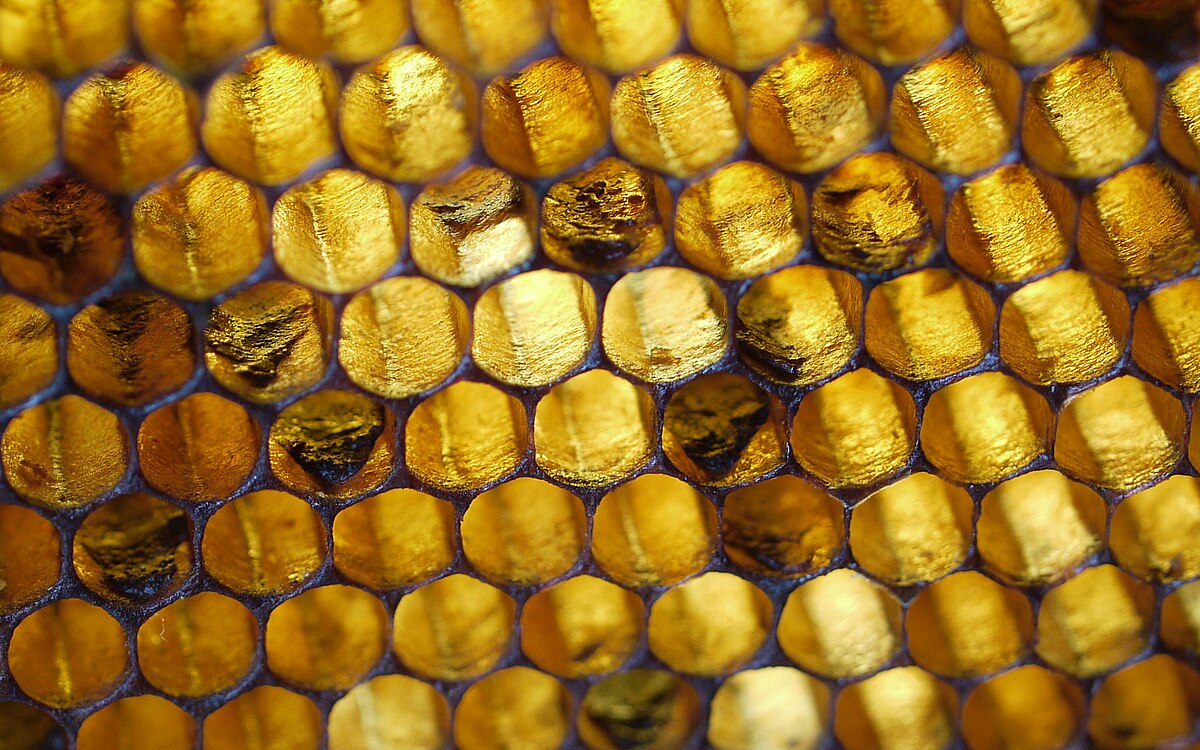

Treat these signs as a guide only. Other brood problems look similar (see Chalkbrood, sacbrood and nosema), and a second bacterium in the dead larvae can add ropiness and mimic AFB. BeeAware says only laboratory testing reliably separates AFB from EFB.
Gear you need
- A clean matchstick or small stick for each suspect cell.
- For a sample: a clean plastic jar, paper towel, plastic bags, and a padded bag or small sturdy box.
- Hive tool, smoker and protective gear.
- Something to clean your tools afterwards. Business Queensland says to decontaminate hive tools and the smoker.
None of the official pages reviewed for this guide names a field test kit, so confirmation is by laboratory test.
The matchstick test, step by step
- Look at three or more brood frames. Business Queensland says to examine at least 3.
- Push a clean matchstick into a suspect cell.
- Draw it out slowly.
- Look at the thread. A long, dark-brown, ropey thread suggests AFB. A short, light thread suggests EFB.
- Write down the hive, frame and date.
The test only works on moist remains. Once dead larvae dry to a scale they no longer rope, and a negative result does not rule out disease.
Taking a sample
Ask your state department first if you can, and follow its instructions. Business Queensland describes this method:
- If thick, ropey brown material sticks to the matchstick, collect a sample.
- Put the matchstick in a clean plastic jar, or wrap a piece of honey-free comb about 10 cm by 10 cm in paper towel.
- Seal it in a plastic bag, then place that in a padded postal bag or small sturdy box.
- Send it with a completed specimen advice sheet. Do not include live bees.
- Clean your tools and smoker.
Other states have their own laboratories and forms, so check your state’s page before you post anything.
Part 2: What to do and report
American foulbrood (AFB)
No antibiotics. BeeAware says antibiotics are not lawful for controlling AFB in Australia, because they hide the signs without killing the spores. Agriculture Victoria says using them for AFB is illegal in Victoria. No product is registered or permitted for AFB.
What the department asks for instead. AFB spores can last 50 years or more, so the colony is destroyed and the equipment sterilised or burnt. BeeAware and Business Queensland describe these steps:
- Report the suspected disease and ask the department for help before you destroy or move anything.
- Kill the colony in the evening, once the bees have stopped flying, with the entrance and other openings closed. Business Queensland lists freezing, soapy water or unleaded petrol as approved methods.
- Keep honey, comb and hive parts where other bees cannot reach them.
- Irradiate the boxes and frames if possible. Otherwise burn the hive parts in a deep pit and bury the remains (in Queensland, at least 30 cm deep).
- Clean or decontaminate tools, smoker and clothing.
Do not move, sell or give away suspect hives, honey or gear. Rules, sterilising methods and any compensation vary by state.
European foulbrood (EFB)
BeeAware and Business Queensland both recommend requeening with a queen from a reputable breeder, because hygienic behaviour varies between stocks. Replace diseased comb with new comb on new foundation. Business Queensland says light infections often clear during a good nectar flow.
Antibiotic option. Oxytetracycline is the only treatment the APVMA has registered for EFB. It is a Schedule 4 product, so only a vet can supply it, and whether to use it is a vet’s decision. BeeAware warns that antibiotics can leave residues in honey and encourage resistant strains. If a vet supplies it, use the dose on the label.
| Product | Active ingredient | APVMA status |
|---|---|---|
| Broodmix | Oxytetracycline hydrochloride | Registered (NSW, Queensland and Victoria only); Schedule 4 |
| CCD OTC 10 Soluble Powder | Oxytetracycline hydrochloride | Registered; Schedule 4 |
| CCD OTC 100 Soluble Powder | Oxytetracycline hydrochloride | Registered; Schedule 4 |
Status checked on the APVMA register on 31 October 2026; registrations run to 30 June 2027. Agriculture Victoria names oxytetracycline for EFB in its own advice.
What to report, state by state
| State | AFB | EFB | Who to contact |
|---|---|---|---|
| NSW | Notifiable | Check the official page | NSW DPIRD |
| Victoria | Notifiable: tell an apiary officer without delay | Check the official page | Agriculture Victoria, 136 186 |
| Queensland | Category 1 restricted matter: report within 24 hours | Check the official page (BeeAware lists it as not reportable here) | Biosecurity Queensland, 13 25 23 |
| Western Australia | Check the official page | Prohibited organism: you must report it. Not found in WA | DPIRD: [email protected] |
| Tasmania | Notifiable | Notifiable | Biosecurity Tasmania, 03 6165 3777, [email protected], or a BeeTAS diary entry |
| SA, ACT, NT | Check the official page | Check the official page | Your state or territory department |
BeeAware lists AFB as reportable in every state and territory, and EFB as reportable everywhere except Queensland. If in doubt, report it. See State-by-state rules.
Preventing foulbrood
- Check all brood combs at least twice a year, in spring and autumn (BeeAware), and whenever you move frames.
- Replace brood comb every three to four years.
- Know your gear. Treat secondhand boxes, frames and comb as possibly infected.
- Don’t feed honey or pollen from other hives unless it has been irradiated.
- Clean tools between hives, and don’t leave honey or wet comb out for robbing.
- Use barrier management: keep groups of hives separate and don’t swap bees, comb or gear between groups.
- Buy bees and queens from reputable sources, and stay registered. See Registering your hives.
Photo credits
- AFB scale in comb: Dalibor Titera (Beedol.cz), Wikimedia Commons, CC BY-SA 4.0.
Sources
Every fact on this page was checked against at least two independent sources.
- American foulbroodBeeAware (Plant Health Australia)Official
- European foulbroodBeeAware (Plant Health Australia)Official
- American foulbroodBusiness QueenslandOfficial
- European foulbroodBusiness QueenslandOfficial
- American foulbroodNSW Department of Primary Industries and Regional DevelopmentOfficial
- What to do if you detect or suspect American foulbroodAgriculture VictoriaOfficial
- Notifiable bee pests and diseasesAgriculture VictoriaOfficial
- Oxytetracycline to control European foulbroodAgriculture VictoriaOfficial
- European foulbroodWA Department of Primary Industries and Regional DevelopmentOfficial
- Bee Pests, Diseases and WelfareBiosecurity Tasmania (NRE Tas)Official
- Public Chemical Registration Information System (PubCRIS)Australian Pesticides and Veterinary Medicines Authority (APVMA)Official
- Should you use antibiotics to treat your hive?eXtensionAUS Professional BeekeepersResearch and industry