Getting bees
The main ways to start with bees in Australia (nucs, packages, established hives and swarms), what to check before buying, and how to move bees legally.
There are four main ways to get your first bees in Australia. They differ in cost, risk and the experience they ask of you. Whichever you choose, the bees come with whatever pests and diseases their previous home had, so where they come from matters as much as what you buy.
Step 1: Choose an option
| Option | What you get | Main advantage | Main drawback |
|---|---|---|---|
| Nucleus colony (nuc) | A small working colony: a queen, workers, brood and honey on a few frames | Already laying and growing | Needs ordering early; health still has to be checked |
| Package bees | A quantity of adult bees in a screened cage with a food source, usually with a queen | Some states with tight entry rules, such as Western Australia, accept health-certified packages | Hard to judge their health by eye |
| Established hive | A full colony in its own boxes | Bees and equipment together | Unknown disease history unless the seller is reliable |
| Swarm | A cluster of bees that has left its hive | Costs nothing; swarms occur in spring and early summer | Unknown origin, health and temperament |
- Nuc. Agriculture Victoria describes it as a queen with 3 to 4 combs of bees, brood and honey, and suggests buying one from a reputable queen breeder or equipment supplier as probably the best way to start. Supply is limited, so order well in advance. The AgriFutures guide to buying from breeders gives the same advice, and notes that the queen season is longer in warmer climates, so availability depends on where the seller is.
- Package. The bees arrive without comb or brood, so the colony starts from scratch once installed. Industry biosecurity guidance says it is hard to judge the health of package bees or purchased queens by sight, because viruses, bacteria and mites can be present without symptoms. Buy only from a business that takes health testing and record keeping seriously.
- Established hive. You get a working colony and its equipment, and whatever disease the hive carries. Agriculture Victoria advises inspecting every brood comb before you pay and before the hive is moved, because some buyers have paid for diseased hives that then had to be destroyed.
- Swarm. Swarming is how a colony reproduces, usually in spring and early summer. It is the option with the most unknowns (see Step 4).
Step 2: Check before you buy
- A registered seller. Beekeepers must register in every state and territory (see registering your hives), and AgriFutures advises checking that a breeder is registered. In Western Australia a beekeeper may only sell or supply a hive or nucleus hive to a registered beekeeper.
- A written health statement. Ask for a vendor declaration: a written statement about the health of the bees and equipment being sold. Agriculture Victoria and the national biosecurity manual both recommend it.
- An inspection before payment. Where possible, examine the colony and hive parts yourself, or take an experienced beekeeper who can recognise brood disease.
- Sound boxes and frames in good condition, the same size as your own.
- A young queen, preferably marked. Queens should be young and gentle, particularly in suburbs. A marked queen is easier to find and makes it easier to tell whether the colony has replaced her.
- A local seller. Buying within your own state avoids interstate paperwork, and Queensland advises limiting the movement of hives, swarms and nucs to reduce the spread of pests.
As at October 2026, official sources report varroa mite in New South Wales, Victoria, South Australia, Queensland and the Australian Capital Territory. Tasmania and Western Australia report that it has not been detected there. Check the current position on the Outbreak.gov.au varroa page and ask any seller about their mite testing. The Pests, Diseases & Biosecurity section covers this in detail.
Step 3: Buying second-hand equipment
Used boxes, frames and combs can carry American foulbrood spores. Agriculture Victoria says the spores can stay dormant for 50 years or longer and resist heat, sunlight and chemical disinfectants. It adds that there is no way of knowing whether spores are on or in second-hand hive material, and that the history of equipment stored for years may never be known.
Official advice is consistent:
- Buy only from beekeepers who regularly check their hives for pests and disease.
- Treat used equipment as contaminated until it has been sterilised. The national manual says to sterilise or irradiate second-hand equipment before it enters your apiary. Agriculture Victoria calls irradiation the best course for used hive material without bees.
- Keep purchased hives and used equipment separate from your other gear. The national manual advises isolating purchased hives for up to 12 months until you are satisfied of their health, and NSW DPI advises keeping second-hand equipment apart for at least twelve months.
- Do not swap combs or boxes between your hives and the new ones.
Buying a complete beginner kit new avoids this risk. See what you need to start and choosing a hive.
Step 4: Collecting a swarm
A swarm can cost nothing, but it is not a risk-free way to start. Register before you collect.
- Check that the swarm has settled low and within easy reach, such as on a branch. Hiving is simplest then.
- Get help. NSW DPI suggests contacting the Amateur Beekeepers Association to find someone to help, and a local club can do the same elsewhere.
- Shake or place the cluster into a box, then keep it separate from other hives until you are satisfied it is free of notifiable conditions.
- Consider varroa. NSW advises considering whether a swarm may be carrying varroa, especially where many infestations have been found. Business Queensland advises avoiding bringing swarms into an apiary until they have been treated and a negative wash has been recorded.
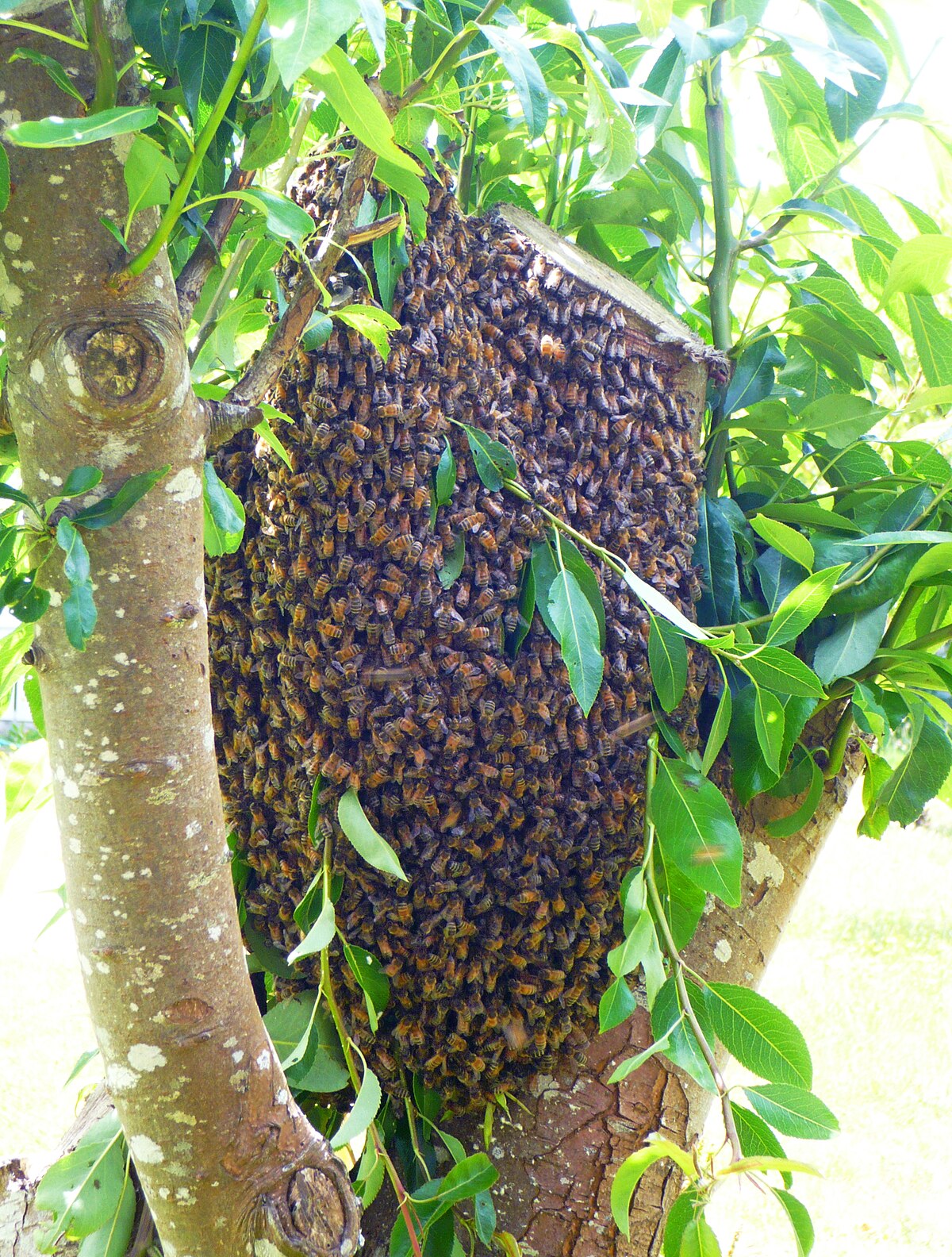

Temperament varies between strains (NSW DPI). Agriculture Victoria notes that replacing the queen of a swarm can give quiet, productive bees, but that takes some experience.
Bees living inside a wall, roof or other structure are an established nest, not a swarm, and removing them is a different job. Ask an experienced beekeeper to help; Lane Cove Council (NSW) notes that a licensed pest controller may be required for bees in a wall cavity.
Step 5: Moving bees across state borders
Each state and territory sets its own rules for bringing in bees, hives and used equipment, and penalties can apply. Rules have changed several times since varroa was found, so always check the destination state before you buy from, or move bees to, another state.
Some examples, as at October 2026 (the Australian Honey Bee Industry Council keeps a national summary in its interstate hive movement guideline):
| State | Rule |
|---|---|
| Victoria | Anyone bringing in bees, bee products or used beekeeping equipment from another state or territory must apply for, and be granted, a health certificate |
| New South Wales | Conditions for bringing in hives, bees and apiary products are set in its Biosecurity Order; nothing known to be contaminated with American foulbrood is allowed in |
| Tasmania | Restricts the import of bees and used equipment to keep varroa out |
| Western Australia | Strict import requirements; bees need an import permit |
South Australia, Queensland, the Northern Territory and the ACT also set their own conditions. Queen bees are covered too. Ask a seller outside your state who will be responsible for the paperwork before you pay.
Step 6: Register, then install
Register as a beekeeper before or as soon as you have bees. South Australia asks you to register before acquiring honeybees, and Victoria requires anyone who owns one or more hives to register. Fees and processes are on registering your hives.
- Have the hive, stand and water supply ready before the bees arrive. Bees that start using another water source in your area are hard to change.
- Place the hive in its permanent spot, then move the nuc frames into the hive and fill the rest of the box with frames fitted with foundation.
- If you buy package bees, follow the seller’s instructions for introducing the queen and bees.
- Check the colony, queen and brood within a month of arrival, as the national manual advises, and record the source, date and what you bought.
Next: Your first inspection and Your first year.
Photo credits
- Swarm in a tree: Ellin Beltz, Wikimedia Commons, Public domain.
Sources
Every fact on this page was checked against at least two independent sources.
- Beekeeping for beginnersAgriculture VictoriaOfficial
- Biosecurity Manual for Beekeepers (version 2.1, September 2025)BeeAware / Plant Health AustraliaOfficial
- Diagnosis, control and eradication of American foulbrood diseaseAgriculture VictoriaOfficial
- American foulbrood - barrier systems (Primefact 824)NSW Department of Primary IndustriesOfficial
- Recreational Beekeeping: a guide to beekeeping in South AustraliaPrimary Industries and Regions South Australia (PIRSA)Official
- Backyard beekeeping (Primefact 894)NSW Department of Primary IndustriesOfficial
- Interstate Hive Movement Guideline (3 July 2026)Australian Honey Bee Industry CouncilResearch and industry
- Moving bees interstateAgriculture VictoriaOfficial
- Movement of beesNSW Department of Primary Industries and Regional DevelopmentOfficial
- How to deal with a swarmNSW Department of Primary Industries and Regional DevelopmentOfficial
- Hive registration and brandingBusiness QueenslandOfficial
- Varroa mite (Varroa destructor)Outbreak.gov.au (Australian Government)Official
- What should you ask your bee breeder?AgriFutures AustraliaResearch and industry
- Beekeeper registration and responsibilitiesDepartment of Primary Industries and Regional Development (Western Australia)Official
- Varroa miteBiosecurity Tasmania, Department of Natural Resources and Environment TasmaniaOfficial
- Varroa mite of honey beesDepartment of Primary Industries and Regional Development (Western Australia)Official
- Bees and bee keepingLane Cove Council (NSW)Official
- American foulbroodExtension Australia (professional beekeepers)Research and industry